
Technology news moves quickly, but most headlines boil down to a handful of larger shifts that quietly change how we work, shop, communicate and protect ourselves. Understanding these trends helps you make smarter decisions about what to buy, what to ignore and which habits to build. This overview looks at eight trends that matter to everyday U.S. consumers and small business owners, explains why each one is happening and offers practical advice on how to respond without chasing every new gadget.
Disclosure: some links may earn us commissions; see our affiliate disclosure. This article is analysis and opinion based on broadly reported industry developments, not a prediction of any specific product release.
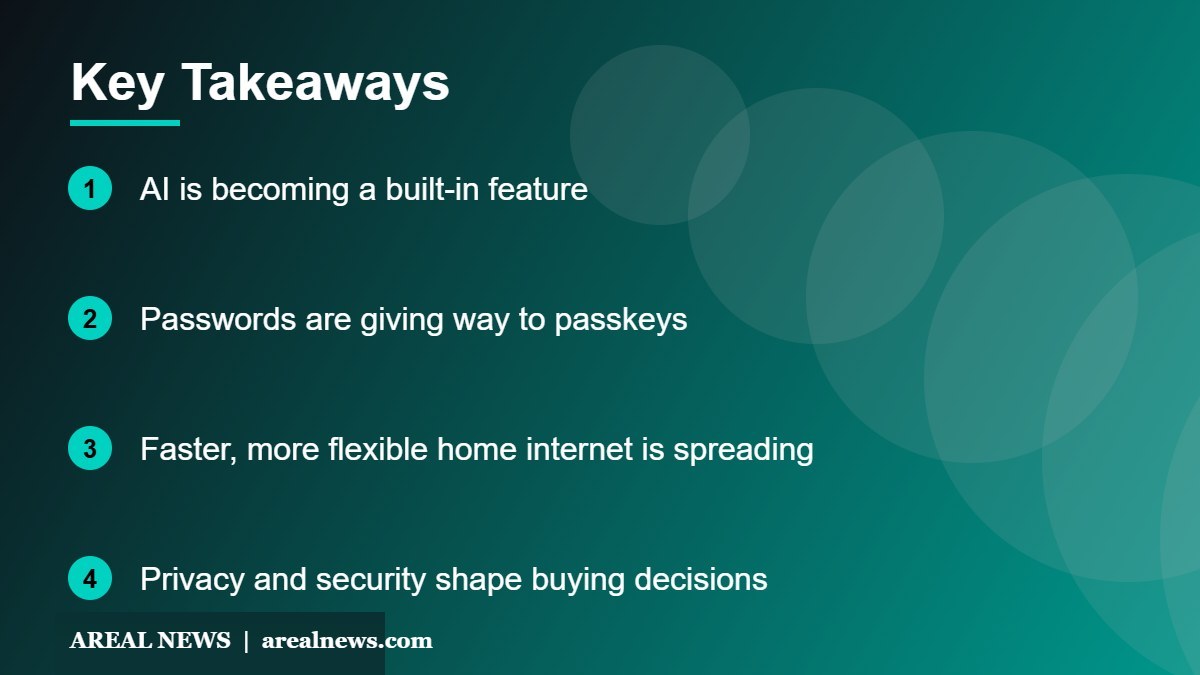
1. AI Is Becoming a Built-In Feature
Artificial intelligence moved from novelty to everyday tool in just a few years. It now sits inside email, search, photo apps, office software and phones. The trend is toward AI that works quietly in the background, summarizing, drafting and sorting, rather than a separate chatbot you visit. What it means for you: learn two or three practical uses and verify results. Start with how to use AI to save time at work, compare assistants in ChatGPT vs Claude vs Gemini and explore AI tools for small business.
2. AI Hardware in Laptops and Phones
Chipmakers are adding neural processing units so devices can run AI tasks locally, improving battery life and privacy. Software support is still catching up, so this trend rewards patience. Read how AI PCs are changing laptops before paying extra for a badge.
3. Passkeys and the Slow Death of Passwords
Major platforms and many websites now support passkeys, which use cryptography and biometrics to replace passwords. They resist phishing and simplify sign-ins. The practical advice: enable them for your most important accounts and keep using a password manager. See what is a passkey and best password managers.
4. Faster and More Flexible Home Internet
Fiber continues to expand, cable providers are upgrading networks and 5G home internet has given many households a new choice. Wi-Fi 7 routers are arriving to take advantage of faster plans. Compare options in 5G home internet vs cable vs fiber and what is Wi-Fi 7.
5. Smart Homes Grow Up
New compatibility standards aim to let devices from different brands work together more reliably, and cameras, locks and thermostats are becoming simpler to install. Security and subscription costs remain the main concerns. See our guides to security cameras, smart locks and smart thermostats.
6. Privacy Becomes a Selling Point
After years of data breaches and tracking controversies, consumers increasingly choose products that emphasize privacy. VPN use has become mainstream, browsers add tracking protection and companies advertise on-device processing. Learn the basics in best VPN services for U.S. users and understand your rights in Is a VPN legal in the USA?.
7. Subscriptions Everywhere
Software, security cameras, cloud storage, even car features are shifting to monthly fees. That makes total cost of ownership more important than sticker price. Read the fine print, track your subscriptions and use free alternatives when they meet your needs. Compare options in best cloud storage services and free VPN vs paid VPN.
8. Cybersecurity Is Everyone’s Job
Phishing, ransomware and identity theft affect individuals and small businesses alike. Attackers are using AI to craft more convincing scams, but defenders have better tools too. Good basics still work best: updates, unique passwords, two-factor authentication and backups. See how to spot phishing scams, two-factor authentication guide and best online backup services.
How to Respond Without Chasing Every Trend
- Fix the basics first: password manager, two-factor authentication, backups and updates.
- Upgrade on need, not hype: replace devices when they stop meeting your needs.
- Test before committing: use free trials and refund windows.
- Watch total cost: include subscriptions and accessories.
- Read independent reviews: especially for new product categories.
- Keep learning gradually: one new skill at a time beats constant overwhelm.
What Small Businesses Should Do Now
Pick one repetitive task to automate with AI, move important files into secure cloud storage with backups, require two-factor authentication for all staff, and review internet and security equipment for age. Strong tools from project management software and web hosting guides can improve operations at modest cost.
Smart Buying and Safety Checklist
Tech headlines move fast, and early reports are sometimes incomplete or wrong. Look for confirmation from official announcements and multiple reputable outlets, read past the headline for details, and treat rumors and leaks as rumors. Consider how a new development affects you in practice: what it costs, what it replaces and what you would need to change. Waiting for independent reviews before spending money on a brand-new product is almost always a smart habit.
Frequently Asked Questions
Which trend matters most for individuals?
Security basics, because they protect everything else. Passkeys and two-factor authentication are the easiest upgrades.
Should I buy new devices to benefit?
Only if your current ones are old, unsupported or slow. Most trends are gradual.
Will AI replace my job?
AI will change many tasks, but people who learn to use it well tend to benefit.
Final Thoughts
The big story is not any single gadget but the way AI, security, connectivity and privacy are converging. By focusing on the fundamentals and adopting new tools carefully, you can enjoy the benefits of each wave without overspending or taking unnecessary risks.
How We Research and Update This Guide
Every Areal News guide on technology starts with the questions U.S. readers actually ask. We review official documentation, published specifications, independent test results where they exist and real-world user feedback, then compare products on the same criteria so recommendations are consistent. We explain our reasoning instead of simply ranking products, so you can adjust the advice to your own situation and budget.
Technology changes quickly. Prices, plans, features and availability can change after publication, so always confirm current details on the provider’s own website before you buy or sign up. We revisit our guides regularly and update them when something important changes. If you spot an error or an out-of-date recommendation, please tell us through our contact page and we will review it promptly.
Some of our articles contain affiliate links. If you purchase through one, we may earn a commission at no additional cost to you. Commissions never decide which products we recommend or how we rank them; our affiliate disclosure explains how we keep editorial decisions independent. This article is for general information and is not professional legal, financial or security advice.


