
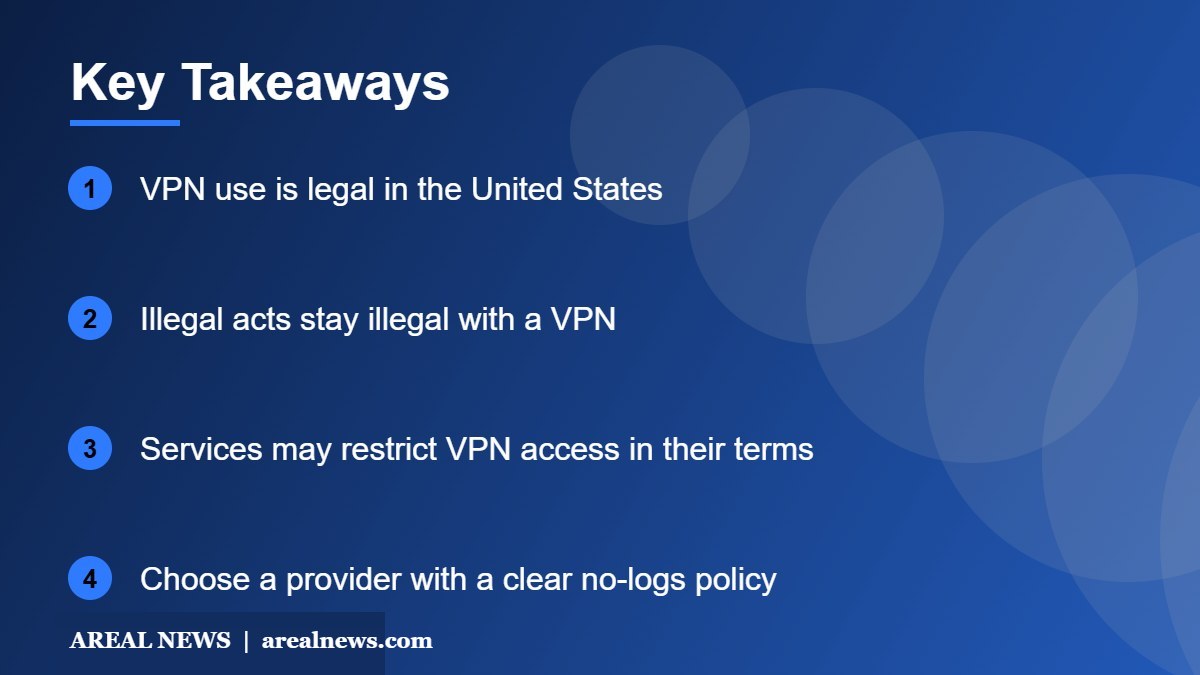
It is one of the most common questions people ask before buying a VPN: is it actually legal? In the United States, the short answer is yes. Using a virtual private network is lawful for individuals and businesses, and millions of Americans use one every day to protect their privacy on public networks, work remotely and secure sensitive information. But there are important nuances, and understanding them helps you use a VPN responsibly.
This article is general information, not legal advice. If you have a specific legal concern, speak with a qualified attorney. For product recommendations, see our best VPN services for U.S. users; some links may be affiliate links as described in our affiliate disclosure.
The Legal Status of VPNs in the United States
No federal law prohibits ordinary Americans from using a VPN. Businesses have used VPNs for decades to connect employees to company networks securely, and the technology is built into many operating systems. Encryption tools are also widely available and legal for private use.
What matters is what you do while connected. Using a VPN does not create a special legal shield. Crimes such as fraud, harassment, hacking or distributing illegal content remain crimes whether or not you hide your IP address. Courts and law enforcement can still pursue investigations through other means, such as device evidence or cooperation from the services involved.
What You Can Legally Do With a VPN
- Protect your data on public Wi-Fi at airports, hotels and cafés.
- Prevent your internet provider from easily seeing which sites you visit.
- Connect securely to your employer’s network while working from home.
- Reduce tracking by advertisers and data brokers.
- Access your own accounts and services when traveling, within each service’s rules.
What a VPN Does Not Make Legal
A VPN is not a license to break the law. Downloading copyrighted material without permission is still infringement. Accessing accounts you are not authorized to use is still unauthorized access. Evading a court order or bypassing lawful restrictions can also create serious problems. The safest approach is to treat a VPN as a privacy tool, not a way to avoid responsibility.
VPNs, Streaming and Terms of Service
Streaming platforms license content by region, and many of their terms of use prohibit circumventing geographic restrictions. Violating terms of service is generally not a crime, but the platform can block your connection or, in rare cases, suspend an account. Our guide to VPNs for streaming in the USA explains how this works in practice and why some services fail to unlock content.
Employers, Schools and Public Networks
Your workplace or school can set its own rules for its networks. Some organizations ban personal VPNs because they interfere with monitoring or security tools. Violating those policies is not a legal issue in the criminal sense, but it can lead to discipline. If you are on a company device, check with your IT department before installing anything.
Privacy Laws and What Your VPN Provider Knows
A VPN moves your trust from your internet provider to the VPN company. If that provider keeps logs, those logs could be requested by authorities with legal process. That is why a verified no-logs policy and independent audits matter so much. Providers based in jurisdictions with strong privacy protections may be less exposed to broad data requests, though no jurisdiction is entirely immune.
You should also keep in mind that a VPN does not prevent websites from identifying you if you log in. Combine it with sensible habits, such as using unique passwords and two-factor authentication. Learn more in our two-factor authentication guide.
Using a VPN Abroad
Laws outside the United States differ widely. Some countries restrict or ban VPNs, or only allow government-approved services. If you travel internationally, research local rules before you go. Install and configure your VPN before leaving, since provider websites may be blocked in some countries. On your phone, our guide on how to use a VPN on iPhone and Android will help you set it up in advance.
Common Myths About VPN Legality
Myth: A VPN makes you completely anonymous
Reality: A VPN hides your IP address from websites and your browsing from your internet provider, but cookies, logins, browser fingerprinting and payment details can still identify you.
Myth: Only criminals use VPNs
Reality: Corporations, universities, journalists, healthcare organizations and ordinary families all use VPNs. Remote work made them mainstream, and many companies require them for access to internal systems.
Myth: VPNs are illegal because streaming sites ban them
Reality: A site refusing a VPN connection is a business decision about licensing, not a criminal prohibition. The consequence is usually just a blocked page.
Myth: Law enforcement cannot touch VPN users
Reality: Investigators have many tools, from device forensics to court orders, so a VPN is not a guarantee of secrecy.
Tips for Using a VPN Responsibly
- Choose a reputable provider with transparent policies.
- Use it for privacy and security, not to hide wrongdoing.
- Follow the terms of services you use.
- Follow workplace and school policies on your devices.
- Keep your devices updated and protected with good security software. See our picks for the best antivirus software for Windows.
Frequently Asked Questions
Can I get in trouble for using a VPN in the USA?
Not for simply using one. Trouble arises from illegal activity or violations of rules set by an employer, school or service.
Can my ISP tell I am using a VPN?
Usually yes. They can see that you are connected to a VPN server, but not the contents of your traffic.
Is using a free VPN legal?
Yes, but free services may have privacy trade-offs. Read our comparison of free and paid VPNs.
Do police track VPN users?
Lawful investigations can involve many methods. A VPN reduces exposure but does not make criminal activity untraceable.
Conclusion
VPNs are legal and valuable privacy tools in the United States. Use them for security, travel, remote work and everyday privacy, respect the rules that apply to you, and choose providers you can trust. That way you get the benefits without the headaches.


