
Search for a VPN in any app store and you will find hundreds of free options with glowing reviews. It is easy to see the appeal: why pay when you can protect your browsing for nothing? The truth is that running a VPN is expensive. Servers, bandwidth, engineering and security audits cost real money, so every free VPN has to earn revenue somewhere. Understanding where that money comes from is the key to deciding whether free is good enough for you.
This article compares free and paid VPNs on privacy, performance, limits and trust. For a full ranking of premium services, see our best VPN services for U.S. users. Some links may be affiliate links; read our affiliate disclosure.
How Free VPNs Make Money
Free VPN providers generally fall into three groups.
1. Freemium services from reputable companies
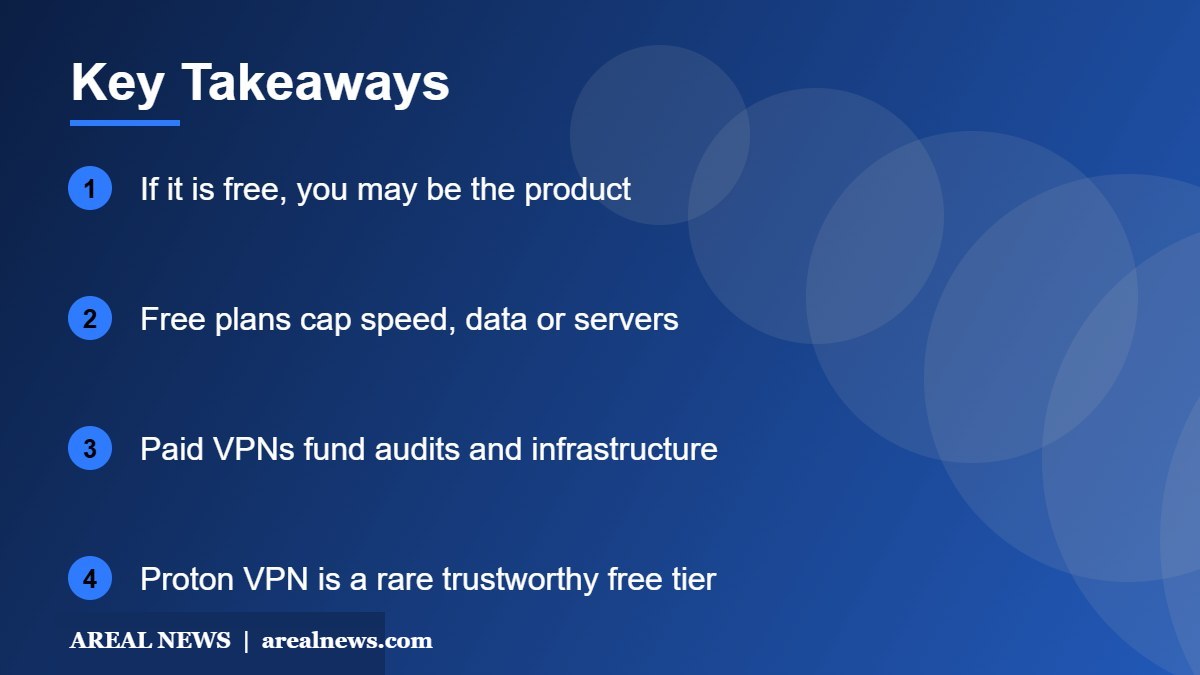
Some established VPN brands offer a limited free tier as a trial or a way to attract paying customers. They fund the free plan with paid subscriptions. Proton VPN is the best-known example: its free plan has no data cap, though it offers fewer server locations and lower speeds than paid tiers.
2. Ad-supported or data-driven services
Others display ads or collect data about your activity and sell insights to third parties. That undermines the very reason you installed a VPN. Researchers have repeatedly found free apps with weak encryption, aggressive trackers or misleading privacy claims.
3. Services with hidden risks
The worst offenders embed malware, inject ads into your web pages or quietly turn your device into an exit node for other people’s traffic. These are rare among well-known brands but common among obscure apps with generic names.
Free VPN vs Paid VPN: Side-by-Side
- Privacy: paid providers have a business model that depends on keeping your trust and often publish third-party audits. Free providers vary widely.
- Speed: free plans commonly throttle speeds or place you in crowded servers. Paid plans offer faster protocols and more capacity.
- Data limits: many free apps cap you at a few hundred megabytes or a few gigabytes per month. Paid plans are usually unlimited.
- Server choice: free users often get only a handful of locations. Paid users can pick from dozens of countries and many U.S. cities.
- Streaming: free VPNs rarely work with major streaming services. See our streaming VPN guide.
- Support: paid plans include live chat and detailed help centers. Free plans generally do not.
When a Free VPN Is Enough
A reputable free VPN can make sense in limited situations: protecting a single device on public Wi-Fi at a café, checking a website from a different location once in a while, or trying a provider’s app before you buy. If you only browse lightly and do not mind slower speeds, a trustworthy freemium plan is fine.
When You Should Pay
You should choose a paid VPN if you stream or download large files, work remotely with sensitive data, need several devices covered, or simply want consistent speeds. The monthly cost of a long-term plan is usually less than a cup of coffee, and the value in reliability and transparency is far greater than the savings from a risky free app.
How to Vet Any VPN Before You Install It
- Research the owner. Who runs the company, and where is it based? Avoid anonymous developers.
- Read the privacy policy. Look for a clear statement on logs, data sharing and advertising.
- Look for audits. Independent security audits are a strong sign of seriousness.
- Check app permissions. A VPN does not need access to your contacts or photos.
- Search for independent reviews. Trust tech publications and researchers over app-store ratings, which can be manipulated.
Do You Even Need a VPN?
A VPN is a useful privacy tool, but it is not a replacement for good security habits. Use a password manager, enable two-factor authentication and keep your software updated. Our guides to the best password managers and two-factor authentication cover the basics. If you are curious about the rules, see whether VPNs are legal in the USA.
Real-World Scenarios
The student on campus Wi-Fi
A student who mostly browses, reads and uses email can get by with a reputable free tier for occasional protection on shared networks. The key is keeping expectations realistic: speeds will be modest, and some websites may not load through a free server.
The remote worker
Someone who logs into company systems from home or a co-working space should not rely on a free tool. Reliability, support and verified no-logs policies matter, and a paid plan is a small expense compared with the risk of exposed work data.
The traveler
Frequent travelers need servers in many countries, stable connections on hotel Wi-Fi and apps that reconnect automatically. Those are exactly the features that separate paid services from free ones.
Cost Comparison
Free VPNs cost nothing up front, but the price may be paid with your data or your time. Paid VPNs typically offer a discount of well over half on multi-year plans compared with month-to-month pricing, and nearly all include a refund window. If you are unsure, buy a paid plan, test it for a few weeks, and cancel if it does not suit you. That approach gives you a premium experience without long-term risk.
Frequently Asked Questions
Are free VPNs safe?
Some are, particularly freemium plans from established companies. Others are risky. Stick with known brands that publish audits and clear privacy policies.
Why are free VPNs slower?
They place many users on limited servers and often throttle speeds to encourage upgrades.
Can a free VPN unblock streaming?
Usually not. Streaming platforms block most free VPN addresses.
What is the best free VPN?
Proton VPN’s free tier is the most widely recommended thanks to its no-data-cap policy and strong privacy record, though it is limited in locations and speed.
Bottom Line
If you need occasional protection, a reputable freemium VPN is a fair starting point. For streaming, remote work, families and anyone who wants reliable speed and verified privacy, a paid VPN is the smarter investment. Treat unknown free apps with caution: if you are not paying, find out who is.


