
For years, most Americans chose between cable and DSL. Today the picture is richer: fiber networks are expanding quickly, and 5G home internet from wireless carriers has emerged as a real alternative, especially where cable has little competition. Each technology has distinct strengths, and the best choice depends on what is available at your address and how you use the internet. This guide breaks down how they work, how they compare and who should choose which.
Disclosure: some links may earn commissions; see our affiliate disclosure. Availability and prices vary by address, so always confirm with the provider.
How Each Technology Works
Fiber
Fiber uses glass strands to carry light signals directly to your home. Because light travels quickly with minimal interference, fiber supports extremely high speeds, symmetrical uploads and downloads, and excellent consistency.
Cable
Cable uses the same coaxial infrastructure that delivers television. Upgrades such as DOCSIS 3.1 offer high download speeds, but the network is shared among neighbors, and uploads are limited by design.
5G home internet
A wireless gateway in your home connects to a nearby cellular tower using 5G or LTE, then shares Wi-Fi inside the house. There is no installation of cables, and setup is usually as simple as plugging in the device.
Head-to-Head Comparison
- Download speed: fiber highest, cable high, 5G variable and often moderate.
- Upload speed: fiber matches download speed; cable is usually much lower; 5G is moderate.
- Latency: fiber is best for gaming and video calls; cable is good; 5G is decent but can fluctuate.
- Reliability: fiber is the most consistent; cable can slow at peak times; 5G depends on signal and tower load.
- Price: 5G plans are often simple with flat pricing and no equipment fees, cable has promotional rates that rise later, and fiber is often competitive.
- Availability: cable is nearly everywhere, 5G coverage keeps expanding, and fiber is available in a growing but still limited share of the country.
Who Should Choose Fiber?
Fiber is best for remote workers, serious gamers, content creators and households with many devices. If it is offered at your address at a reasonable price, it is usually the best long-term choice. Look at provider options in our internet provider guide.
Who Should Choose Cable?
Cable suits households where fiber is not available and who want high download speeds for streaming and browsing. Check data caps, equipment fees and what happens when the promotion ends.
Who Should Choose 5G Home Internet?
5G home internet is attractive for renters who want quick setup, people who do not want contracts, and households stuck with poor cable or DSL service. Signal strength matters: test the service during the trial period and place the gateway near a window. Providers such as T-Mobile, Verizon and AT&T offer trial periods or satisfaction guarantees on many plans.
Things to Check Before You Sign
- Real speeds at your address. Ask neighbors and check independent reviews.
- Data policies. Some plans slow speeds after heavy use during busy times.
- Price after promotion. Ask for the long-term rate.
- Contract and cancellation terms.
- Equipment. Can you use your own router? See best Wi-Fi routers.
Maximizing Performance Whatever You Choose
A fast connection is only as good as your home network. Place your router centrally, use Ethernet for stationary devices and consider mesh for big homes, as described in best mesh Wi-Fi systems. If speeds disappoint, follow how to speed up slow Wi-Fi. Protect your traffic with a VPN where appropriate; see the best VPN services.
The Future: Wi-Fi 7 and Beyond
New standards make fast home connections even better. Learn how they fit in with what is Wi-Fi 7.
Smart Buying and Safety Checklist
Internet performance depends on more than the advertised speed. Check whether the plan has data caps, equipment rental fees, promotional pricing that expires and contract or early-termination terms. Test your real speeds at different times of day using a wired connection, place your router in a central, open location and keep its firmware updated. If you work from home or stream on many devices, prioritize reliability and low latency over a headline download number.
Frequently Asked Questions
Is 5G home internet fast enough for gaming?
Often yes for casual play, but latency can vary, so competitive gamers may prefer fiber or good cable.
Can I stream 4K on 5G home internet?
Yes, with a good signal. Multiple simultaneous streams may strain weaker connections.
Is fiber worth paying more for?
If you work from home or upload large files, the symmetrical speeds and reliability are often worth it.
Final Verdict
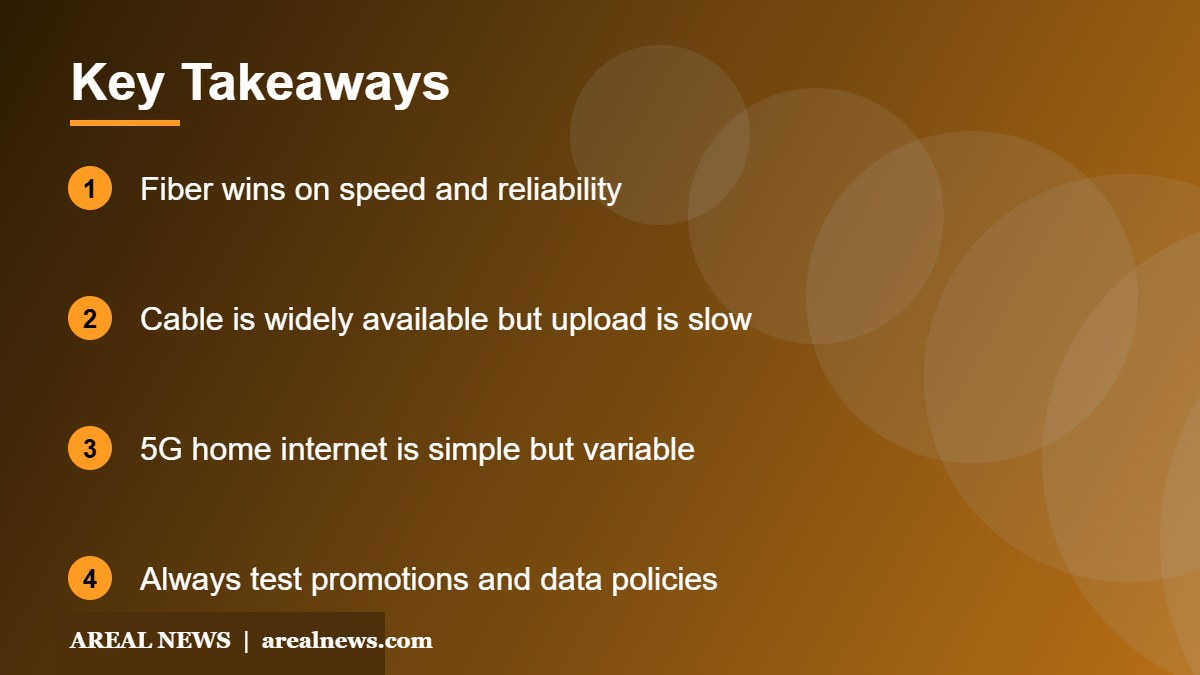
Choose fiber when available, cable when fiber is not an option and speeds meet your needs, and 5G home internet when you want simplicity or have limited choices. Test the service in the first weeks and take advantage of any trial period.
How We Research and Update This Guide
Every Areal News guide on home internet and networking starts with the questions U.S. readers actually ask. We review official documentation, published specifications, independent test results where they exist and real-world user feedback, then compare products on the same criteria so recommendations are consistent. We explain our reasoning instead of simply ranking products, so you can adjust the advice to your own situation and budget.
Technology changes quickly. Prices, plans, features and availability can change after publication, so always confirm current details on the provider’s own website before you buy or sign up. We revisit our guides regularly and update them when something important changes. If you spot an error or an out-of-date recommendation, please tell us through our contact page and we will review it promptly.
Some of our articles contain affiliate links. If you purchase through one, we may earn a commission at no additional cost to you. Commissions never decide which products we recommend or how we rank them; our affiliate disclosure explains how we keep editorial decisions independent. This article is for general information and is not professional legal, financial or security advice.


