
Cell phone bills are one of the easiest household expenses to trim, and one of the easiest to overpay. The United States has three major networks, Verizon, T-Mobile and AT&T, plus dozens of smaller brands that rent capacity from them. Prices, perks and coverage vary widely, and promotions can make comparisons confusing. This guide explains how to choose a plan, compares categories of carriers and shows how to avoid the traps that inflate your bill.
Disclosure: some links may earn commissions; see our affiliate disclosure. Plans and prices change often, so confirm details with each carrier before you switch.
Step 1: Check Coverage Where You Live and Travel
A cheap plan is worthless if you cannot get a signal at home or work. Check coverage maps from the carriers, and ask neighbors and coworkers which network works best in your area. Many carriers offer free trials or eSIM test options, which let you try service before committing. Rural users often find Verizon or AT&T stronger, while T-Mobile has expanded quickly with 5G in many cities.
Types of Carriers
Big three: Verizon, T-Mobile and AT&T
They offer premium plans, strong coverage, device deals, perks such as streaming bundles and international options. They also generally cost more, but offer customer service and retail stores.
MVNOs and prepaid brands
Mobile virtual network operators use the big networks at lower prices. Examples include Mint Mobile, Visible, US Mobile, Cricket and Metro by T-Mobile. They are often much cheaper, with fewer extras and sometimes lower priority during congestion.
Google Fi and cable-company wireless
Google Fi offers flexible plans with good international features, while Xfinity Mobile and Spectrum Mobile give discounts to home internet customers. Compare these with your internet bill; see best internet providers in the U.S..
How to Choose the Right Plan
- Check your data use. Your phone’s settings show how much data you use each month. Many people use far less than their plan allows.
- Count lines. Family plans often reduce the cost per line, but prepaid brands may still beat them.
- Compare after-promo prices. Introductory rates may expire after a year.
- Look at network priority. Premium plans get higher priority during congestion.
- Consider international needs. Roaming and travel perks differ greatly.
- Decide on phone financing. Device payments tie you to a carrier for years. See best smartphones right now.
Hidden Costs to Watch
- Activation, SIM and upgrade fees.
- Autopay or paperless billing requirements for advertised prices.
- Taxes and regulatory fees not included in the headline price.
- Throttling after a data threshold on unlimited plans.
- Mobile hotspot limits.
- Early termination or remaining device balances if you cancel.
How to Switch Carriers Safely
- Check that your phone is unlocked or eligible to be unlocked.
- Confirm that it supports the new carrier’s network bands.
- Back up your phone.
- Ask your old carrier for your account number and transfer PIN, and do not cancel before porting your number.
- Activate the new SIM or eSIM and test calls, texts and data.
- Watch for scams: SIM swap fraud is a real risk. Add a port-out PIN and use app-based two-factor authentication, as covered in our 2FA guide.
Plans for Different Households
A single user who mostly uses Wi-Fi can save the most with a low-cost prepaid plan. A family with several lines benefits from multi-line discounts and shared data, while a household with teenagers may want parental controls and generous data. Remote workers who use hotspots should read hotspot limits carefully. Seniors who mainly call and text can choose basic plans with simple billing.
Saving Money on Your Plan
- Use Wi-Fi at home to lower data use; if it is slow, see how to speed up slow Wi-Fi.
- Switch to an MVNO if your usage is moderate.
- Negotiate with your carrier by asking about retention offers.
- Share a family plan with trusted relatives.
- Review the bill every six months.
Staying Secure on Cellular and Wi-Fi
Public Wi-Fi saves data but adds risks. Use a VPN, as described in our mobile VPN guide, and watch for text scams explained in how to spot phishing scams.
Smart Buying and Safety Checklist
Before buying a phone or wearable, think about how long it will receive software and security updates, how easily the battery and screen can be repaired and what accessories you will also need. Compare carrier deals carefully, including trade-in conditions, promotional credits spread over many months and the full cost of unlocked versus financed devices. Use your phone for a few days within the return period, test the camera and battery in your normal routine and keep a backup of your data.
Frequently Asked Questions
Are cheap carriers as good as the big three?
They use the same networks, though priority may be lower. Many users never notice the difference.
Can I keep my phone number?
Yes, number portability is guaranteed. Use the transfer process carefully.
What is eSIM?
A digital SIM built into your phone. It lets you switch carriers without a physical card.
Final Verdict
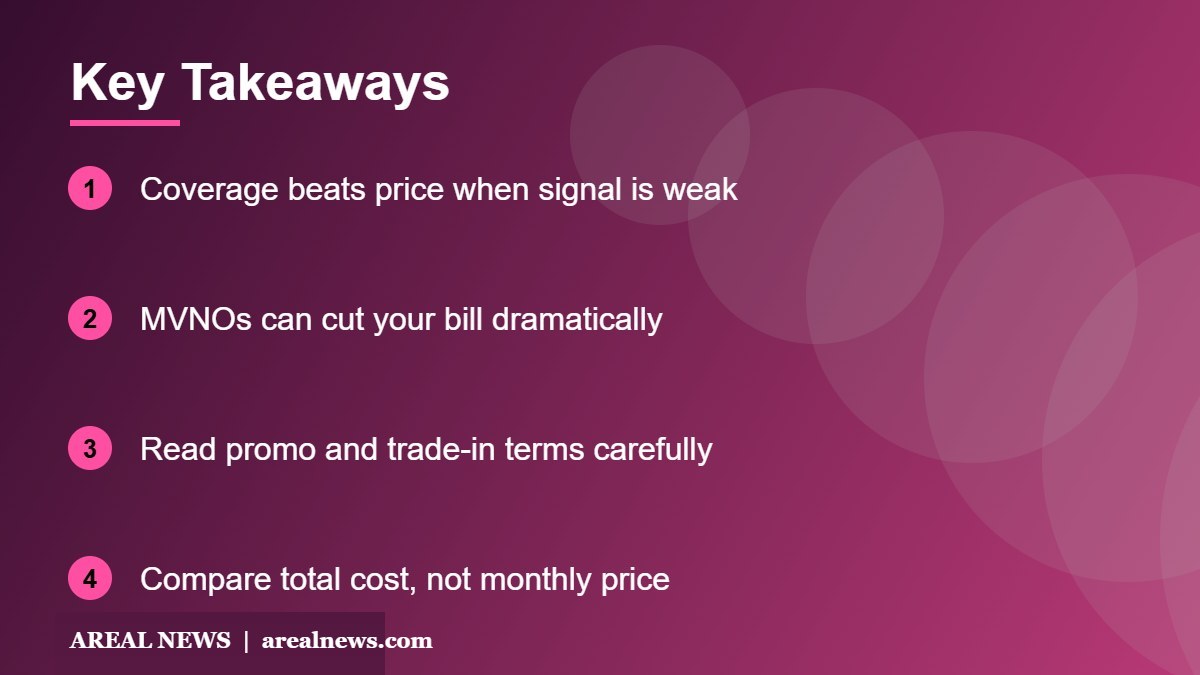
Choose a big carrier if you want premium coverage and perks, an MVNO if you want savings and Google Fi if you travel. Test coverage first, compare long-term costs and review your plan every year.
How We Research and Update This Guide
Every Areal News guide on mobile technology starts with the questions U.S. readers actually ask. We review official documentation, published specifications, independent test results where they exist and real-world user feedback, then compare products on the same criteria so recommendations are consistent. We explain our reasoning instead of simply ranking products, so you can adjust the advice to your own situation and budget.
Technology changes quickly. Prices, plans, features and availability can change after publication, so always confirm current details on the provider’s own website before you buy or sign up. We revisit our guides regularly and update them when something important changes. If you spot an error or an out-of-date recommendation, please tell us through our contact page and we will review it promptly.
Some of our articles contain affiliate links. If you purchase through one, we may earn a commission at no additional cost to you. Commissions never decide which products we recommend or how we rank them; our affiliate disclosure explains how we keep editorial decisions independent. This article is for general information and is not professional legal, financial or security advice.


